


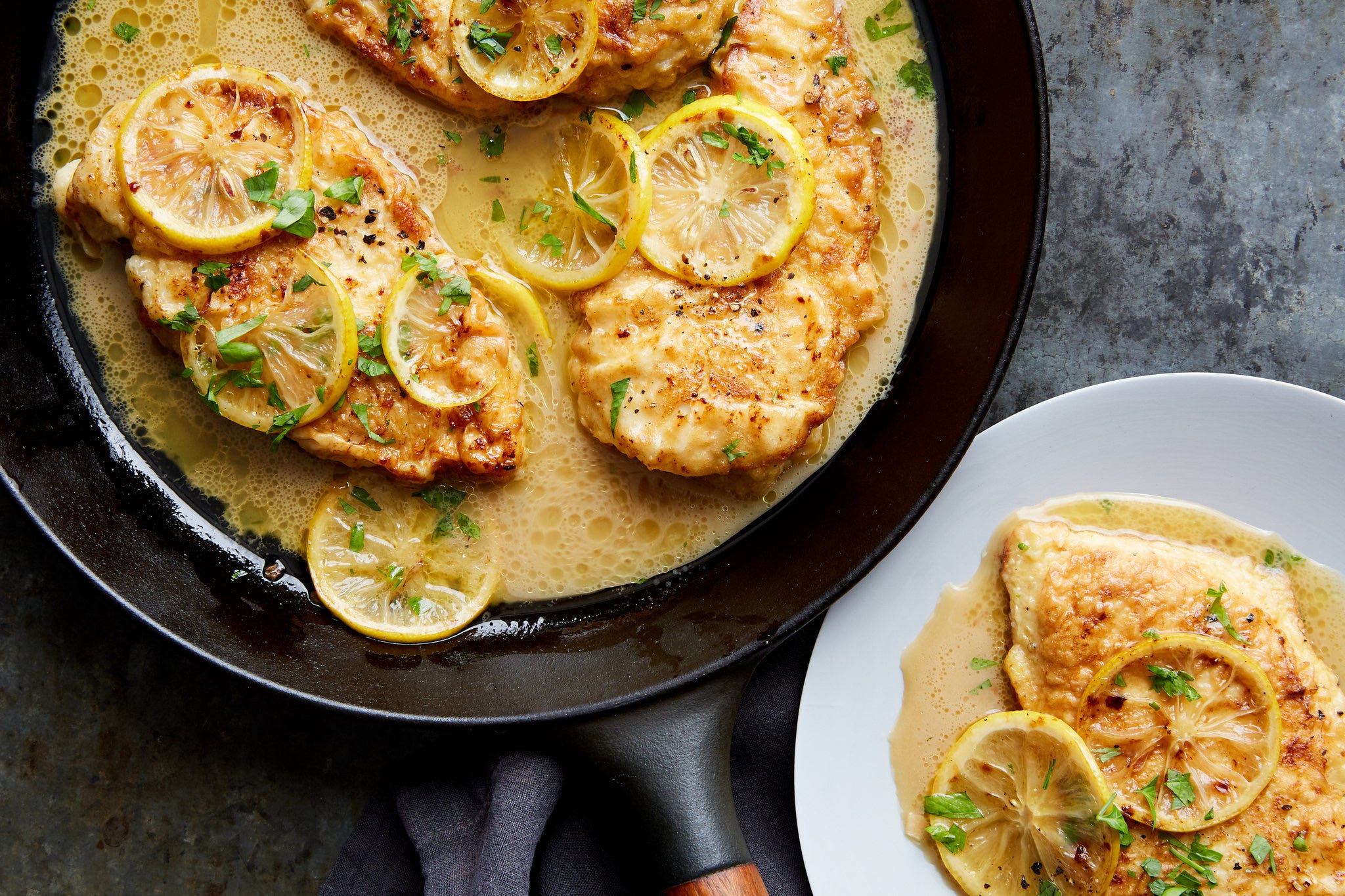
There's a moment, right before it hits the table, when Chicken French announces itself. It's the smell that gets you first — bright lemon cutting through rich, golden butter, the faintest whisper of white wine lifting off a hot skillet. Then comes the sound: that gentle, satisfied sizzle as thin, egg-battered cutlets settle back into their velvety pan sauce, soaking up every last drop of flavor. By the time the plate is in front of you — chicken nestled on a pretty tangle of linguine, scattered with fresh parsley, glistening under the light — you're already sold.
If you grew up in Rochester, New York, you didn't need to be sold. You already knew. Chicken French — or Chicken Francese, if you want to get Italian about it — is as much a part of Rochester's identity as Xerox, Kodak, Wegmans, and the famous Nick Tahou’s Garbage Plate. It's on the menu at white-tablecloth restaurants and neighborhood diners alike. It shows up at weddings, baptisms, and Sunday dinners. It is, without exaggeration, the dish of my hometown.
And a few years ago, it became the dish that brought the New York Times to my door.
A Little Dish With a Big History
To understand why Chicken French matters so much to Rochester, you have to understand where it came from — and how it got its confusingly un-French name.
The story starts in post-World War II New York City, where Italian immigrants brought with them a recipe for vitello francese: thin veal cutlets, dredged in flour, dipped in egg, sautéed in butter, and finished with a bright sauce of lemon and white wine. The name meant "veal in the French style" — a nod to the luxurious, buttery pan sauce that felt decidedly Parisian to Italian-American cooks eager to impress their new country. It became a staple on upscale Italian-American menus across the city, cousin to the piccatas and Marsalas that defined the era.
Eventually, the dish migrated north and west, to Rochester's large, tight-knit Italian-American community. And that's where things got interesting.
In 1967, a restaurant called the Brown Derby opened on Monroe Avenue in Brighton. Its chef, James Cianciola — known to regulars as Chef Vincenzo — began serving his own version of veal francese, and it quickly became the restaurant's signature.
Watch the videos of how they prepared it back in the day
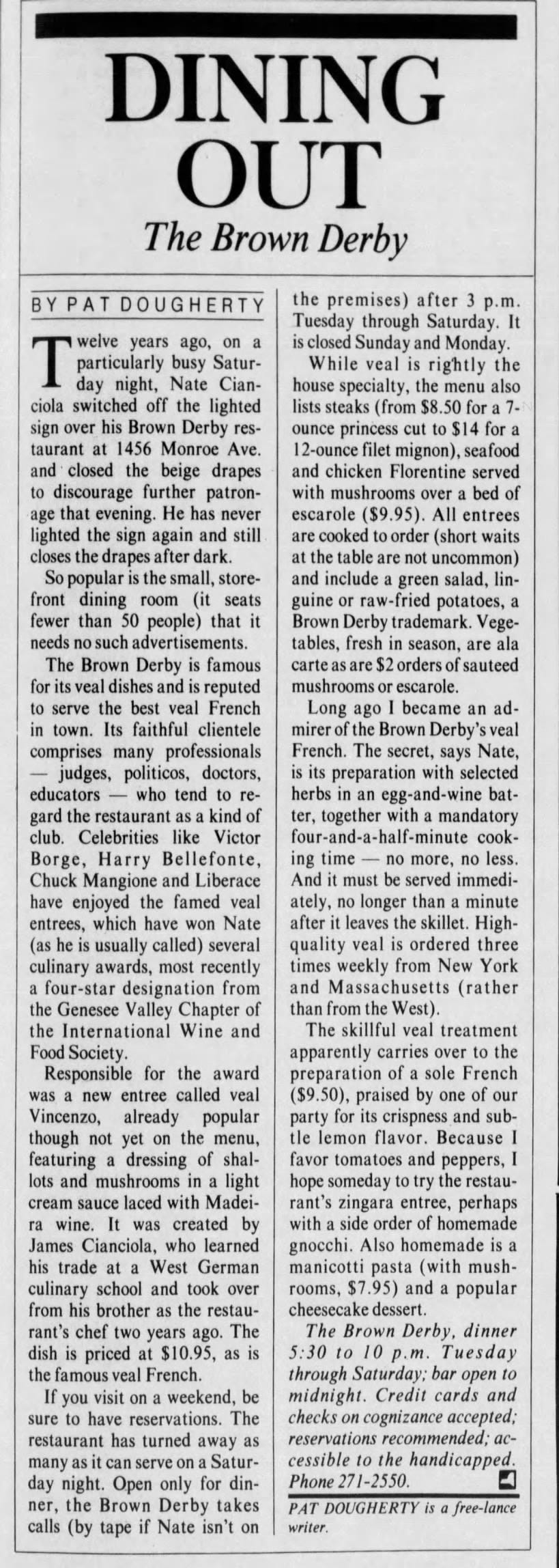
Then came the 1970s, and with them, a wave of animal-rights protesters who picketed against veal outside restaurants across the country. Cianciola's solution? Swap the veal for chicken. The result was, if anything, even better — more tender, more accessible, and just as soaked in that irresistible lemony butter sauce.
Chicken French was born. And Rochester claimed it entirely as its own.
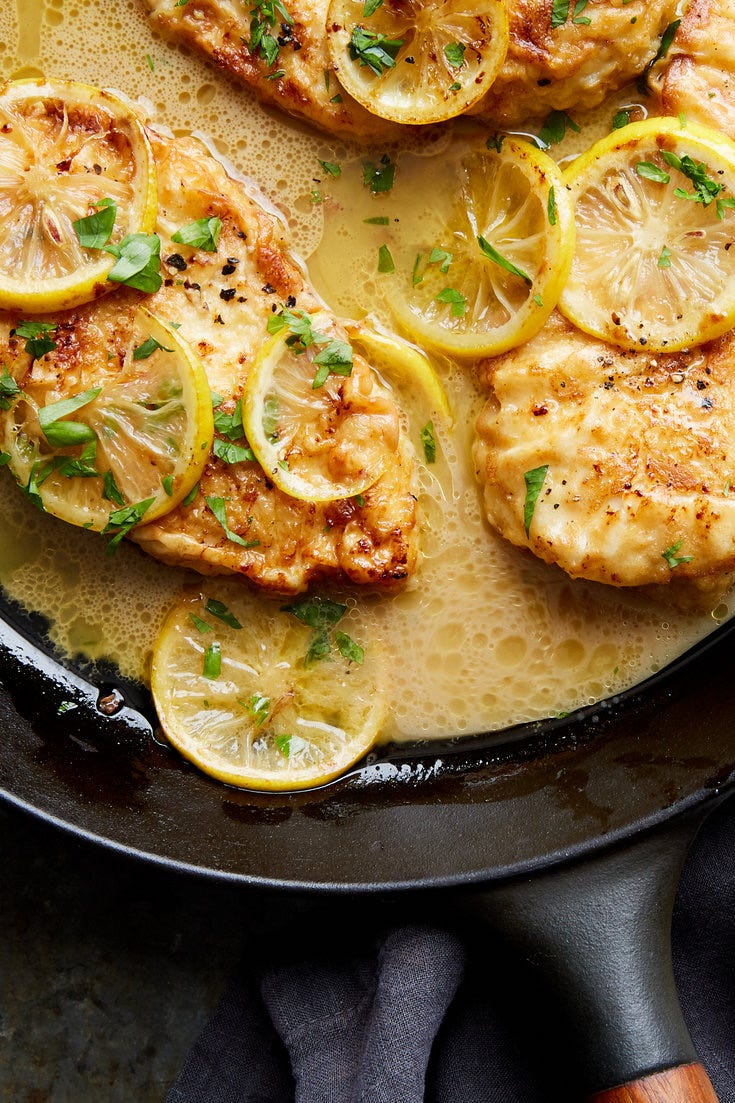
No place has embraced chicken francese more warmly than Rochester, N.Y., a city with an illustrious history of great Italian-American cooking
Soon, the Brown Derby added artichoke French, haddock French, cauliflower French. Other restaurants followed. The dish spread through the city like the best kind of rumor, each kitchen adding its own touch — sherry instead of white wine, a handful of grated Romano in the egg wash, a shower of fresh parsley over the top. Today, food historians have half-jokingly suggested the dish should be renamed "Chicken Rochester." The rest of the world calls it Chicken Francese. We just call it Chicken French.
And we know it's ours.
The Phone Call I'll Never Forget
Several years ago, I wrote about Chicken French on my blog — the history, the nostalgia, my recipe, the whole love letter. This is seriously one of my favorite dishes ever, and the fact that it originated in my hometown from a local Italian-American Chef made me want to pay homage to it and share the recipe.
I’m a food stylist, photographer and recipe developer based in New York, but I grew up in Rochester, so this dish has always been part of my personal food story. Writing about it felt like writing about home.
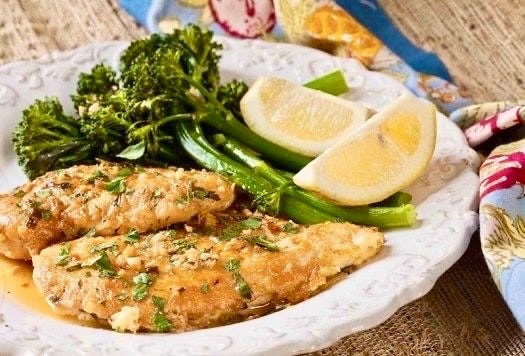
My recipe was adapted from a recipe by ‘ROCGrandma’ on AllRecipes - I wanted to experiment with the recipe enough to make it my own, but keep the authenticity of the key ingredients and original cooking method that made it famous - and it turned out absolutely delicious!
In my recipe, I omitted the sugar, used fine Wondra flour instead of traditional heavier AP flour, added a little extra Parmesan cheese and chopped parsley to the egg batter and used white wine instead of dry sherry, which are all easy substitutes you can make without sacrificing the Rochester-style tradition and way of making Chicken French. I served it with some Lemon Broccolini and lemon wedges with a side of linguine pasta tossed in some of the luscious buttery lemon sauce.
What I didn't expect was a phone call from Julia Moskin, staff food writer at The New York Times Food.
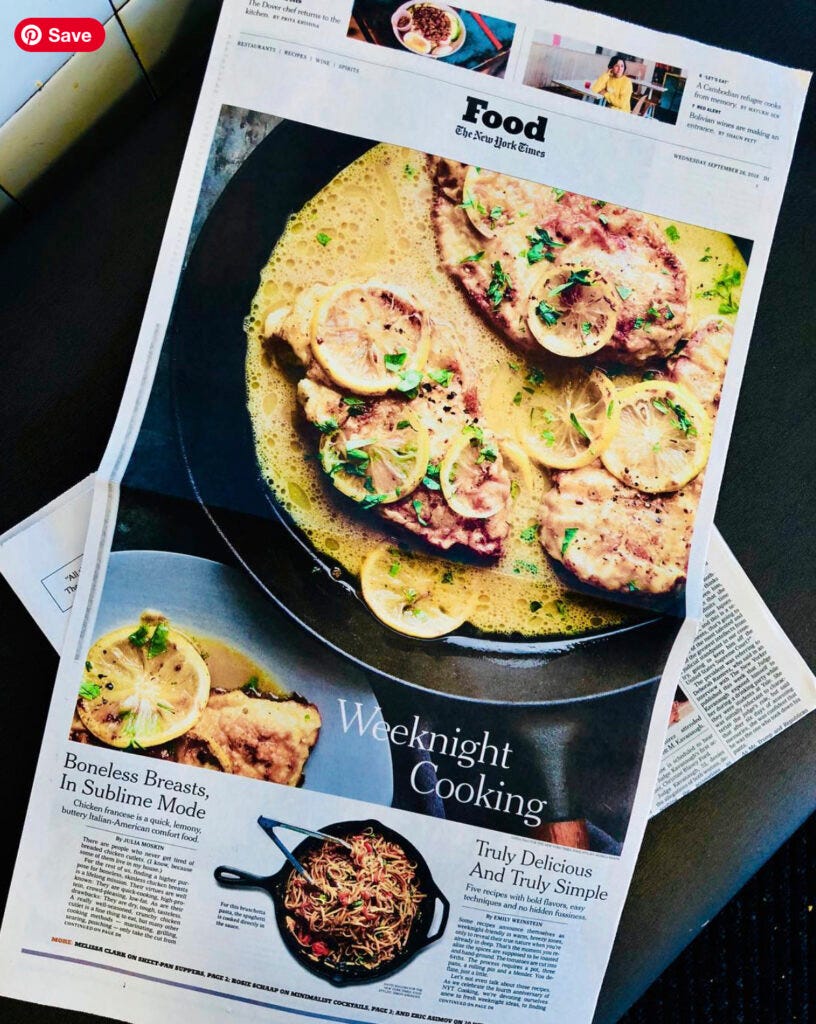
Julia was working on a story about Chicken Francese — what it is, where it came from, and why it had become such a phenomenon. She’d found my story and recipe on my blog and wanted to talk to me about my recipe and everything I knew about the dish.
So we did: about the recipe, about Rochester’s Italian-American history, about the way Chicken French shows up at every important meal in that city, from casual Tuesday dinners to black-tie wedding receptions. My sister Jenni, who has worked in Rochester’s restaurant industry for over 25 years, joined the conversation — she’d watched the dish evolve from the front of the house, seen every variation imaginable come across the pass. When the story ran, it was on the front page of the New York Times Food section — both in print and online. My name was in it. My sister's name was in it. And the recipe, the one that accompanied the piece, was declared “the single best thing you can cook with a chicken breast.”
I'll be honest: I cried a little.
But the story wasn't finished yet. By December 2018, the New York Times had mined its cooking data for the year's most popular new recipes. Chicken Francese came in at number one. Number one. Out of every recipe the Times published that year, this buttery, lemony, deeply humble Italian-American dish from my hometown topped the list.
When I read that, I thought about every Rochester kitchen I'd ever stood in. Every Italian grandmother who made this without a recipe. Every chef who'd perfected his or her own version over decades of dinner service. Every Rochesterian who'd ever told an out-of-towner, "You have to try the Chicken French."
We knew. It just took the rest of the world a little while to catch up.
Why You Need to Make This Recipe
Here's the thing about Chicken French that surprises people who've never made it: it's genuinely easy. Not "easy for an experienced cook" easy. Actually, truly, weeknight easy. Start to finish, you're looking at 35 minutes.
The secret is the egg batter. Unlike a traditional flour-only breading, dipping the cutlets in beaten egg first creates a thin, protective coating that keeps the chicken moist and tender even as it browns. It's the same technique used in Wiener schnitzel and fritto misto — a European tradition that American fried chicken never quite adopted, and honestly, a shame it didn't.
The other revelation is the pan sauce. Once the chicken is browned, you wipe out the skillet, melt butter, add white wine and lemon juice, let it reduce to a syrupy gloss, then pour in chicken stock and cook it down to something silky and bright and deeply savory. You tuck the cutlets back in, let them warm through in the sauce, and that's it. That's the whole dish.
It's also more forgiving than it looks. The cutlets and sauce can be made a few hours ahead and gently reheated — which makes it ideal for entertaining. Your guests will think you've been in the kitchen for hours. You haven't.
A few things I always do: I add a pinch of grated Parmesan and a little fresh parsley directly to the egg wash — that's the Rochester way, and it adds depth. I plate it on a nest of linguine so the pasta soaks up the extra sauce. And I always, always add the caramelized lemon slices. They're beautiful, browned and buttery, and utterly delicious.
Serve it with something starchy — pasta is traditional — or alongside broccoli or green beans if you want something lighter. Pour a crisp white wine: a Pinot Grigio, Soave, a Chablis, a grüner veltliner. Or Champagne, which, as the Times noted, goes remarkably well with this. Rochesterians might not agree, but I'll allow it.
The single best use of boneless, skinless chicken breasts? This Italian-American staple, with its lemony, buttery pan sauce.
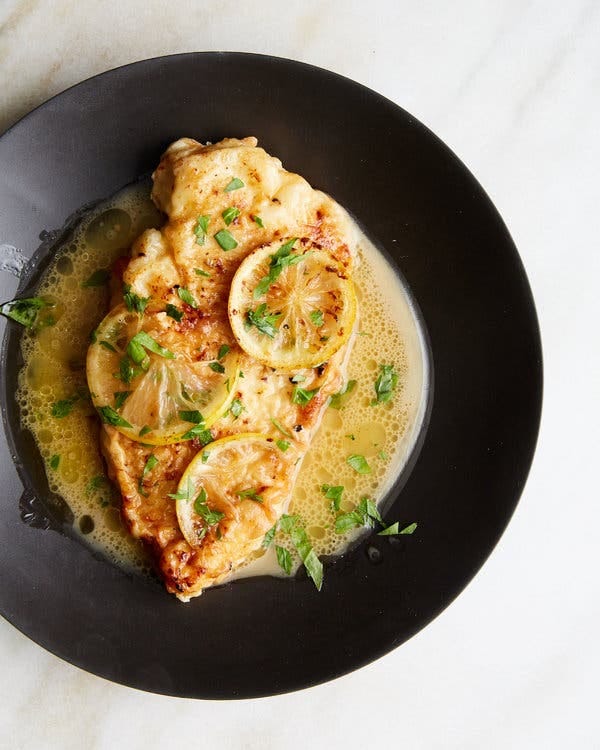
Rochester-Style Chicken French (Francese)
Featured in the New York Times, September 2018.
Recipe: Julia Moskin; original recipe + serving/plating notes by Kristen Hess.
Yield: 4 servings | Total Time: 35 minutes
Ingredients
2 eggs
2 tablespoons whole milk
1 teaspoon salt, plus more for seasoning
½ teaspoon ground black pepper, plus more for seasoning
2 tablespoons freshly grated Parmesan cheese (Kristen's addition — the Rochester way)
1 tablespoon freshly minced parsley, plus 3–4 tablespoons for finishing
1 cup all-purpose flour
⅓ cup olive oil
⅓ cup vegetable oil
4 to 6 large boneless, skinless chicken cutlets, thinly sliced
3 to 6 tablespoons unsalted butter
1 lemon, thinly sliced, seeds removed (optional but recommended)
½ cup dry white wine
Freshly squeezed juice of 1 lemon, more to taste
2 cups chicken stock
Instructions
1. Make the batter and prep the flour. In a wide, shallow bowl, whisk together the eggs, milk, salt, pepper, Parmesan, and 1 tablespoon parsley until fully combined. Place the flour in a separate bowl. Line a baking sheet with paper towels.
2. Heat the oil. In a wide skillet, heat the olive and vegetable oils over medium heat until shimmering.
3. Bread and fry the chicken. Working in batches, lightly dredge each cutlet in flour and shake off the excess. Dip into the egg batter, let the excess drip back into the bowl, then place in the skillet. Fry, turning once, until golden brown on both sides — about 4 minutes per side. Adjust the heat as needed so the cutlets brown slowly and evenly. Transfer to the paper-towel-lined pan. Repeat with remaining cutlets.
4. Wipe the pan. Remove the pan from the heat and carefully pour off the oil. Wipe it clean with paper towels, then return it to low heat.
5. Brown the lemon slices (optional). Melt 3 tablespoons of butter and scatter the lemon slices across the pan. Cook gently, stirring occasionally, until the slices are golden and beginning to caramelize at the edges, about 3 minutes. Remove and set aside.
6. Make the pan sauce. Add 3 tablespoons of butter to the pan along with the wine and lemon juice. Bring to a boil and cook until the liquid reduces to a syrupy glaze, about 3 to 4 minutes. Pour in the chicken stock, bring back to a boil, and cook until the sauce thickens, about 5 minutes. Taste and adjust with more lemon, salt, and pepper — it should be quite lemony and bright.
7. Finish and serve. Reduce the heat and nestle the cutlets back into the pan. Simmer very gently until the sauce is velvety and the chicken is warmed through, about 4 minutes, turning the cutlets occasionally so they're coated all over. Lay the browned lemon slices on top. Sprinkle generously with fresh parsley and serve immediately, spooning plenty of sauce over each plate.
Kristen's Styling & Serving Tips
Plate it beautifully: Serve over a nest of linguine tossed with a little olive oil and butter, splash of lemon juice and chopped parsley. The pasta soaks up the buttery lemony sauce in the most glorious way.
Make it ahead: Brown the cutlets and make the sauce up to 3 hours in advance. Reheat gently on low heat before serving.
The sherry debate: Rochester restaurants are divided — sherry gives a slightly sweeter, more assertive sauce; dry white wine (I like Chablis or Pinot Grigio) keeps it crisp and clean. Try both and decide for yourself.
Come Home to the Table
There's something I love about a dish that carries a whole city inside it. Chicken French is that for me — every time I make it, I'm back in Rochester, at some long Italian dinner that stretches into the night, with a glass of wine and people I love and the smell of butter and lemon in the air.
I'm so proud that this recipe — and this little corner of upstate New York food history — made it to the front page of the New York Times. And I'm even prouder to share it with you here, in this space, where I get to write about food the way it deserves to be written about: as story, as memory, as something worth gathering around.
If you make this — and I hope you will — I'd love to know. Leave a comment, hit reply on Substack, or tag me when you share it. Tell me how you served it, what wine you chose, whether you went sherry or white wine. Tell me if it took you somewhere.
For me, it always takes me home. 💛

About the Author
Kristen Hess is a food stylist, photographer, recipe developer, and food writer behind The Artful Gourmet. Kristen has been published in Downtown Magazine NYC, The Oxford Encyclopedia of Food and Drink and various food publications and blogs online including Colavita.com, KitchenAid.com, NYSRA.com, and many more.
She has also photographed and styled 5 cookbooks including the Pinkalicious Cupcake Cookbook for Harper Collins and four Vegan cookbooks for Gary Null Whole Foods in NYC.
Kristen is also a new cast member of the 2026 ‘Women In Power’ TV Series on Inside Success Networks. Watch her documentary episode on any smart TV on their app or online
Find more recipes, food stories, and culinary inspiration on social media (@artfulgourmet) and on her Substack.
You can find more inspiring food stories, Groovy Eats series and cooking videos on The Artful Gourmet Podcast and YouTube channel.
Tags: chicken french, chicken francese, Rochester NY food, Italian-American recipes, lemon butter chicken, easy chicken cutlet recipe, NY Times chicken francese, comfort food recipes, pasta recipes, dinner party recipes
Go Flour City!
A proud son.
Love seeing this ! I live in the Rochester area and agree that Chicken French is so good! Thank you!